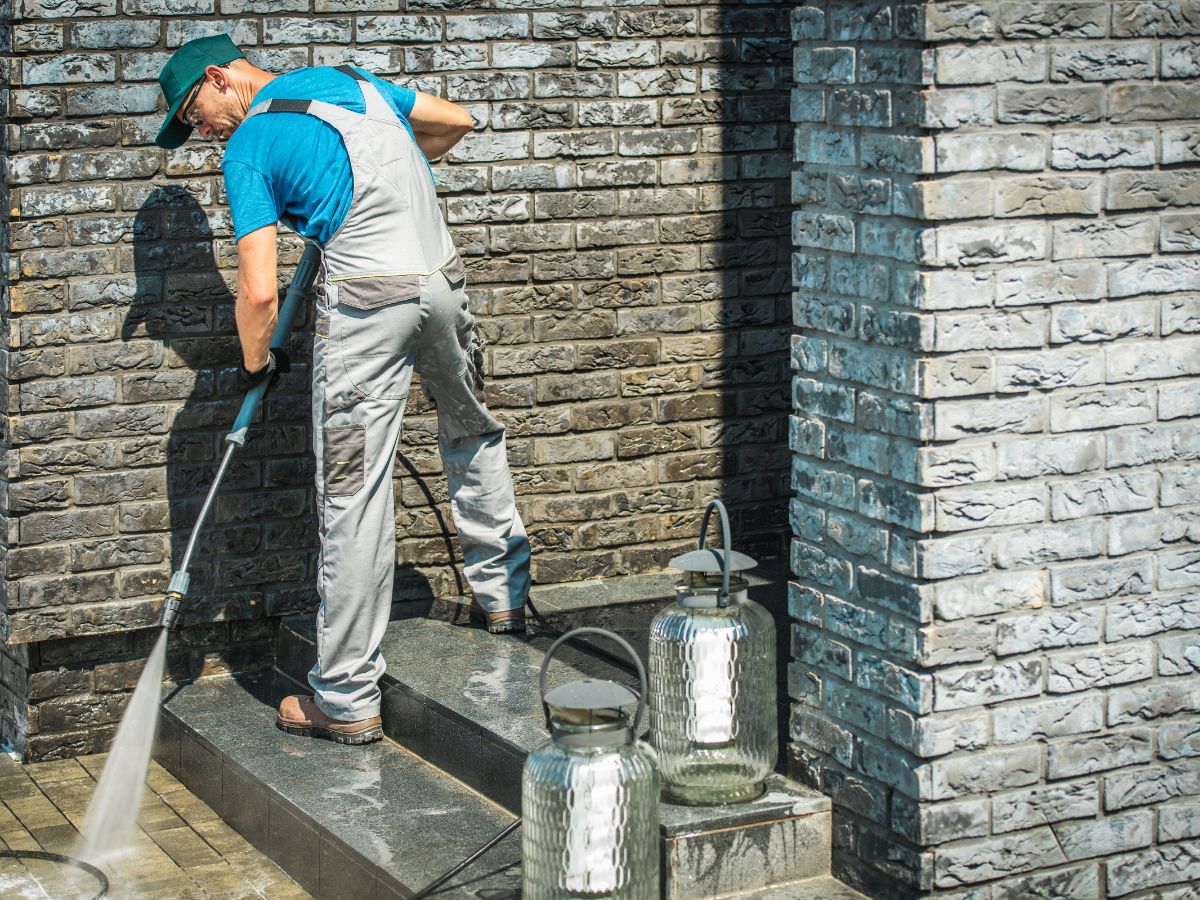
There is no shortage of pressure washing companies serving Bridgewater, MA and the South Shore. Between franchise operations, solo operators with a residential machine and a truck, and established local businesses, a homeowner searching for exterior cleaning can find a dozen options within a few miles. Prices vary widely. Claims are similar. The results — and what happens to the surfaces being cleaned — are not.
This post is about what professional pressure washing actually means in practice: the specific differences between a properly equipped, properly trained exterior cleaning company and the alternatives, and why those differences matter for both the quality of the results and the long-term condition of the surfaces being cleaned.
The Equipment Gap — Why It Matters More Than Most People Realise
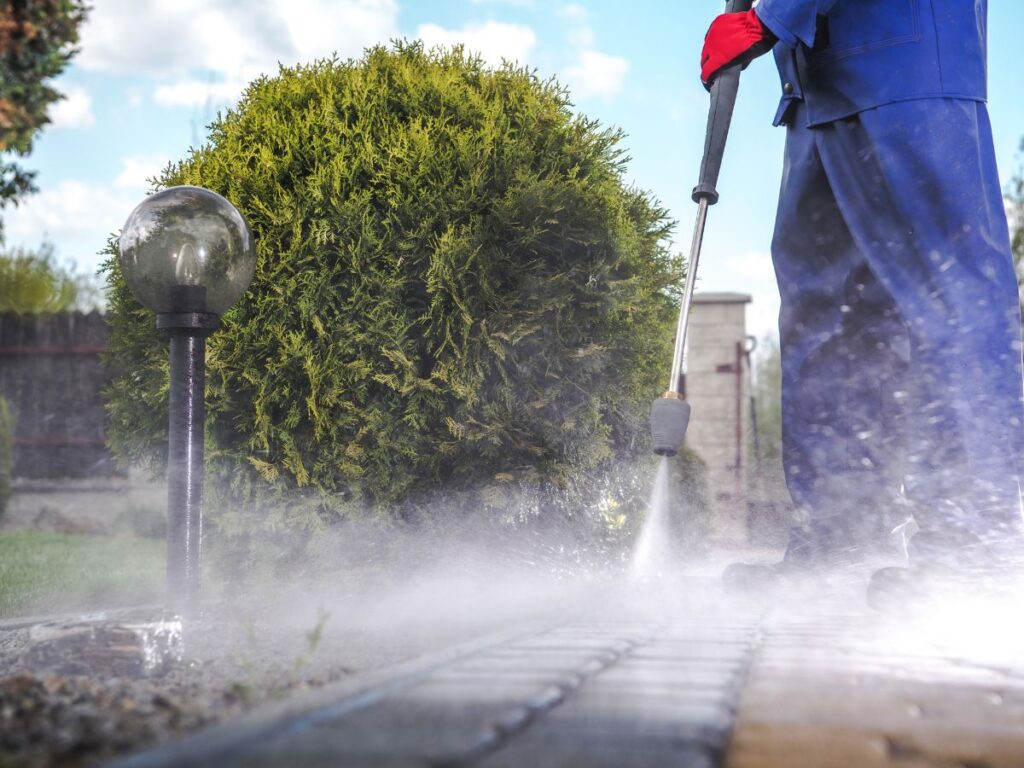
Hot water vs cold water
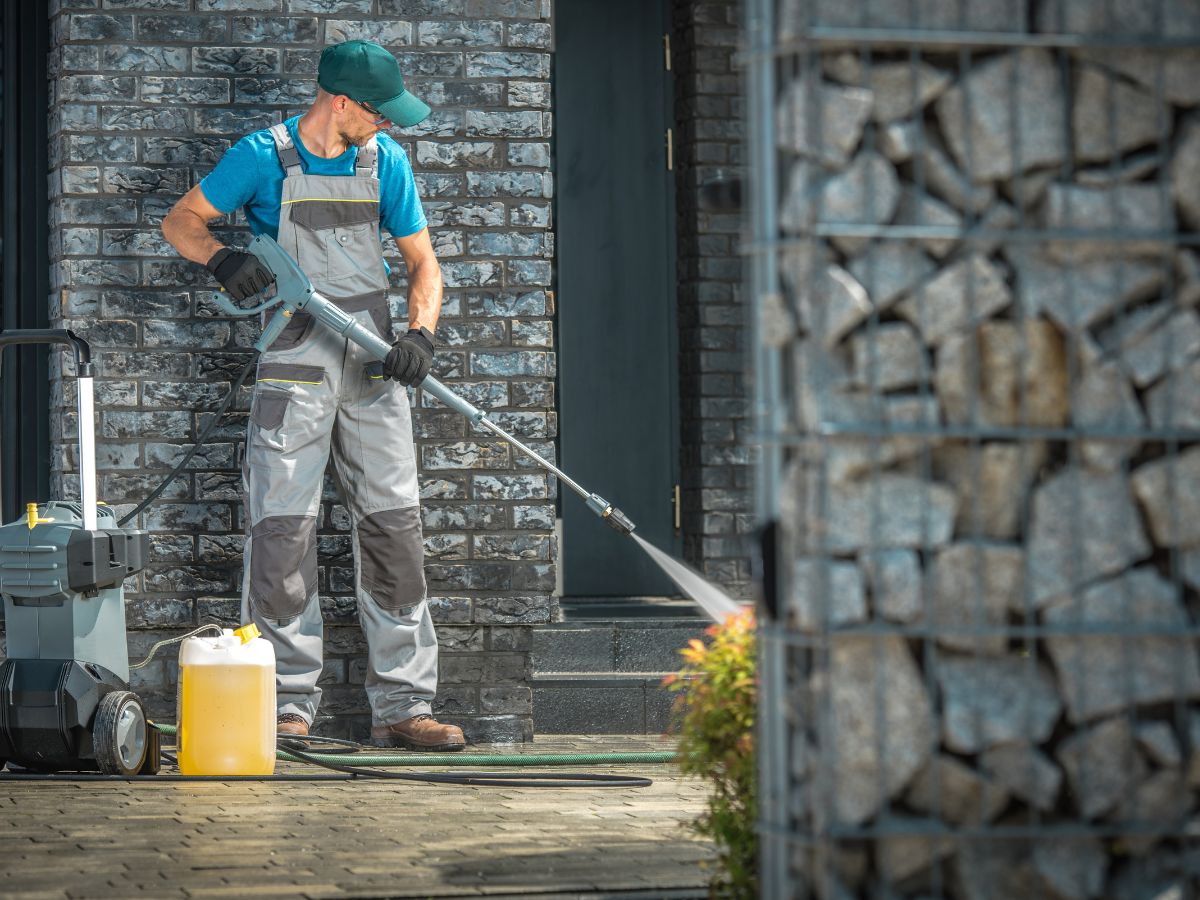
Professional exterior cleaning uses hot water capability for specific applications — oil and grease stains on concrete, heavy organic contamination, and situations where cold water and chemistry alone are not breaking down what needs to be removed. Consumer and entry-level commercial pressure washers are cold water only. Hot water is not always necessary, but when the job calls for it, the difference in result is significant — and a company without the capability simply cannot achieve it.
Surface cleaner attachments
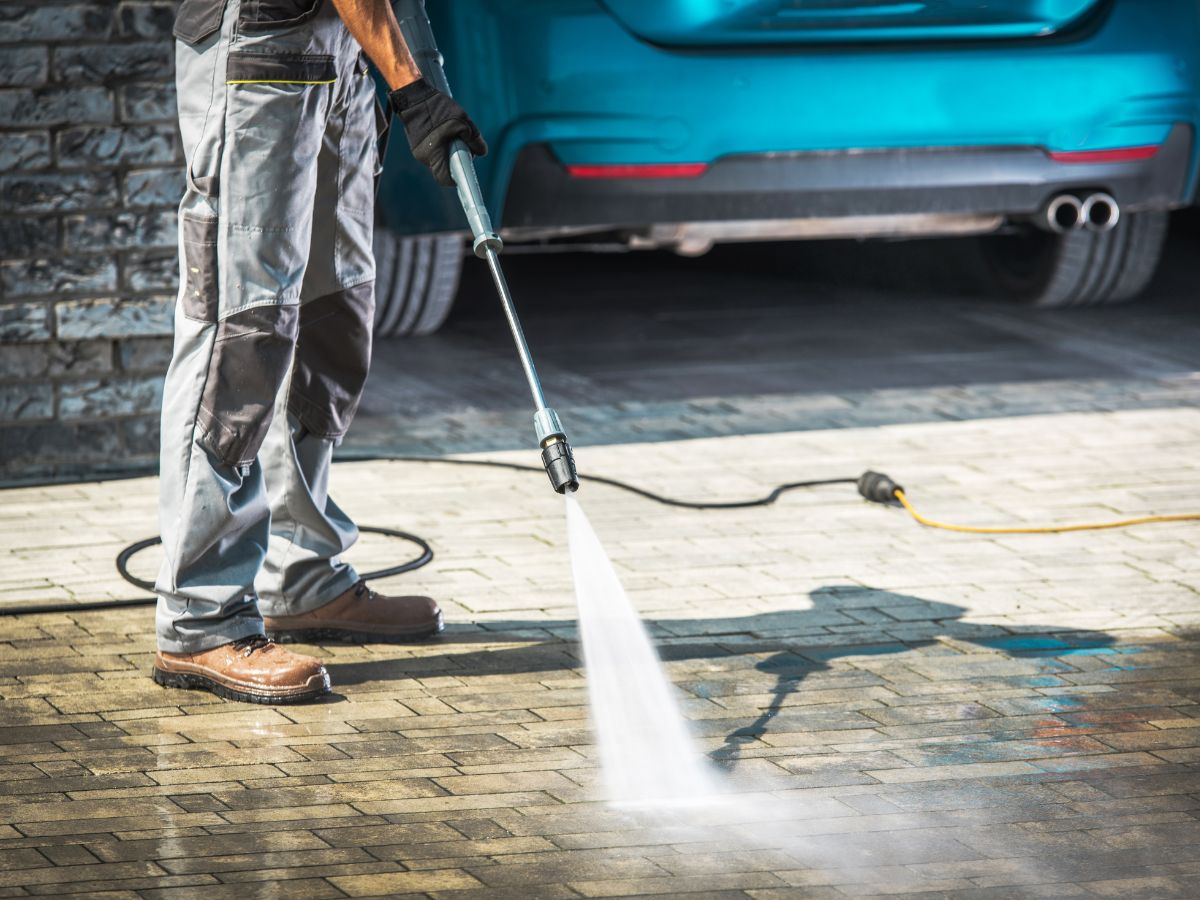
As discussed in our driveway cleaning guide, surface cleaner attachments are what separate streak-free flat surface cleaning from the wand-stripe marks that are the hallmark of less equipped services. A good surface cleaner runs two rotating nozzles inside an enclosed housing, covering a consistent 18 to 20 inch path and keeping overspray contained. Without one, cleaning large flat surfaces — driveways, patios, parking areas — produces uneven results regardless of how carefully the operator works.
Flow rate, not just pressure
Pressure (PSI) gets the attention in equipment discussions, but flow rate (gallons per minute) is equally important. High pressure with low flow simply does not move the volume of water needed to rinse properly and carry loosened debris away from the surface. Professional equipment runs at GPM rates that consumer machines cannot match — which is part of why professional cleaning removes things that DIY attempts leave behind.
Dedicated soft wash systems
Soft washing — the low-pressure, chemistry-led approach used on siding, roofs, and other surfaces that cannot withstand high pressure — requires dedicated delivery equipment separate from the pressure washing unit. A proper soft wash system controls chemical dilution precisely, applies solution at low pressure without streaking, and rinses thoroughly. Operators who attempt soft washing with a standard pressure washer and a downstream injector are working with imprecise chemistry delivery and limited control over application pressure.
The Chemistry Difference — What Cleaning Solutions Actually Do
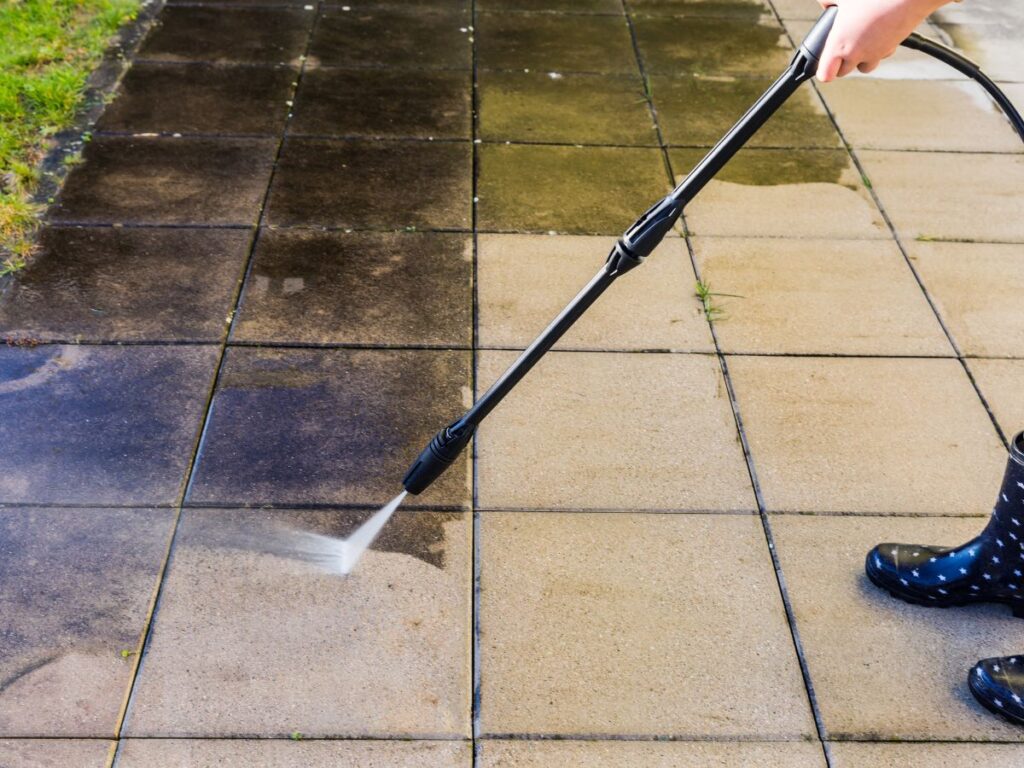
Water and pressure remove loose surface debris. Chemistry removes what is bonded to the surface — biological growth, oil staining, mineral deposits, and oxidised materials that pressure alone cannot dislodge. The cleaning solutions used matter as much as the equipment applying them:
- Sodium hypochlorite (SH): The active ingredient in soft washing chemistry. At appropriate dilution — typically 1 to 3 percent for house washing, lower for sensitive surfaces — it kills algae, mildew, mold, and bacteria on contact. The concentration used matters: too low produces incomplete kill; too high risks surface damage and plant harm from runoff. Professional soft wash operators know the correct dilution for each application
- Alkaline degreaser: The chemistry for concrete oil stains. Alkaline cleaners break the hydrocarbon bonds holding oil in the concrete pore structure, allowing pressure to lift and rinse the released material. Applied as a pre-treatment before pressure washing, not simultaneously
- Surfactants: Wetting agents that reduce surface tension and help cleaning solutions penetrate into pores and organic material rather than beading off the surface. A surfactant added to the wash mix significantly improves the depth of clean on porous surfaces
- Neutralising rinse: After alkaline or acidic cleaning chemistry, a neutralising rinse brings the surface pH back to neutral before the job is complete. Leaving cleaning chemistry on surfaces causes continued chemical reaction with the material and can damage certain surfaces — concrete, natural stone, painted surfaces — if not properly neutralised
A company that uses water only or generic cleaning products without matching chemistry to the specific contamination type is producing an incomplete clean — the appearance may improve but the biology or chemistry causing the staining remains partially active.
The Soft Wash Distinction — Why High Pressure Is Wrong for Most Surfaces
The most consequential technical difference between professional exterior cleaning and less experienced alternatives is understanding when not to use high pressure — and having the equipment and training to deliver an effective clean without it.
Vinyl siding
High pressure applied to vinyl siding forces water behind the panels, into the wall cavity, and against the housewrap or building paper beneath. Water intrusion from pressure washing is a documented cause of mold growth inside walls — a far more expensive and disruptive problem than the original surface staining. Vinyl siding also has a relatively low impact tolerance: pressure that is effective on concrete can crack or deform vinyl, and the damage is permanent.
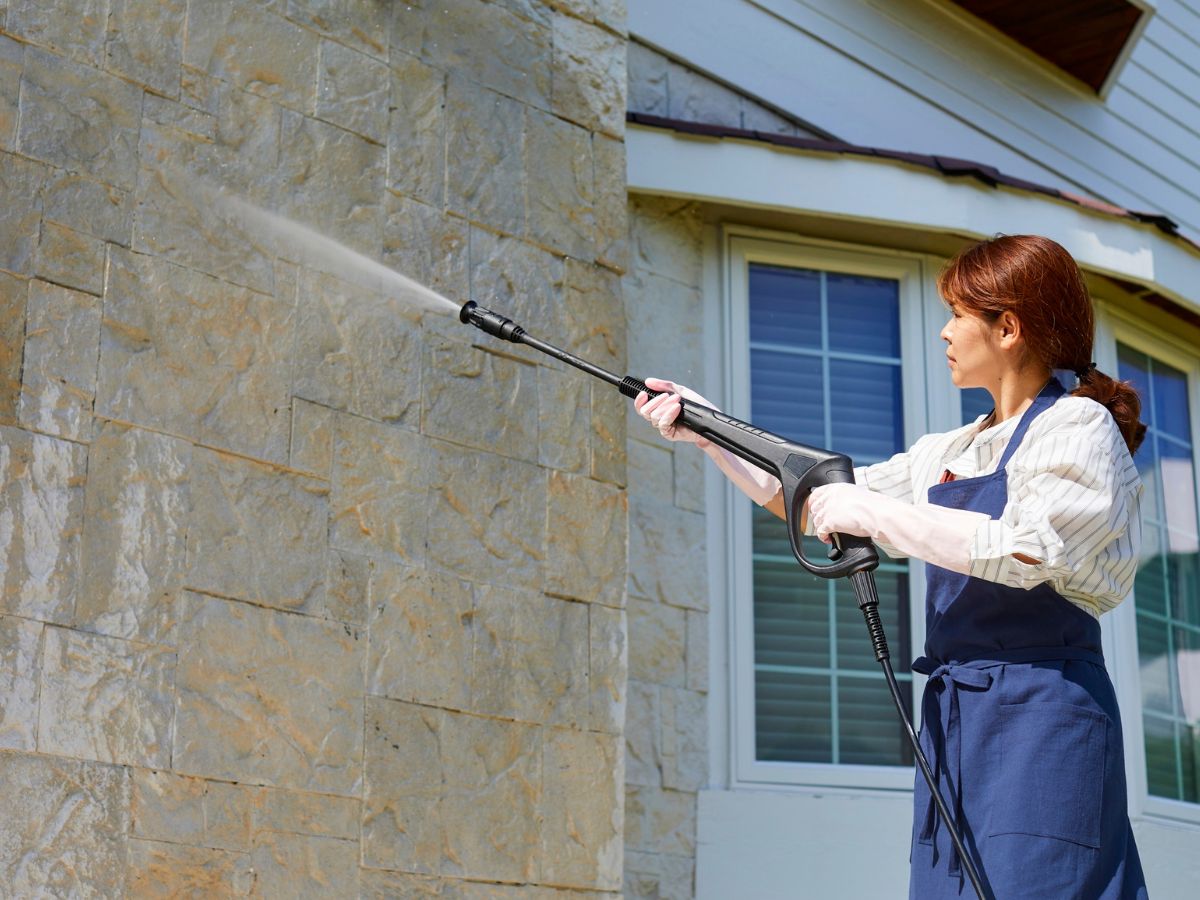
The correct approach is soft washing: low pressure, appropriate dilution of sodium hypochlorite chemistry, applied to dwell on the surface for 3 to 5 minutes before a low-pressure rinse removes the killed biology and loosened grime. Results equal to or better than high pressure, with zero risk of water intrusion or surface damage.
Asphalt shingle roofs
High pressure on asphalt shingles removes granules — the protective mineral coating that gives shingles their UV resistance and impact protection. A single high-pressure cleaning pass on an asphalt roof can remove years of granule life and void the manufacturer warranty. Yet roof cleaning is genuinely necessary: the Gloeocapsa magma algae that produces the black streaking on South Shore roofs degrades shingles by feeding on the limestone filler in the shingle mat.
Soft washing kills the algae without touching the granules. The dead algae rinses away with low-pressure water, and the treatment result lasts significantly longer than a pressure wash because the organism is dead rather than mechanically removed — roots and all.
This is precisely why our roof cleaning service uses soft washing exclusively — protecting the shingles while delivering a result that high pressure cannot safely achieve.
Wood and composite decking
Wood decking cleaned with high pressure is fuzzy decking — the water jets raise the wood grain, leaving a rough texture that splinters more easily, absorbs staining faster, and looks worn rather than cleaned. Composite decking has surface texture and colour that high pressure can strip or abrade. Both surfaces clean well with appropriate pressure reduction and the right chemistry, and the result holds longer because the surface structure is intact rather than opened.
Surface-Specific Knowledge — What Experience on the South Shore Looks Like
Bridgewater, MA and the surrounding South Shore communities have a specific exterior cleaning profile that reflects the region’s conditions: coastal humidity, heavy biological growth, salt-influenced concrete, and the older housing stock common to southeastern Massachusetts. Effective professional pressure washing in this area is informed by knowing what these conditions produce:
- Older vinyl siding formulations: Homes built in the 1980s and 1990s have vinyl siding that is more brittle and less impact-tolerant than modern products. Pressure calibration needs to account for this — what is safe on a 2015 home may crack a 1985 home’s siding
- Wood-framed windows with painted trim: High pressure applied to painted wood trim around windows blisters paint, forces water into the wood, and damages caulk joints. These areas require soft washing or very low pressure with manual pre-treatment
- Foundation staining from road salt and runoff: South Shore foundations accumulate salt efflorescence and biological staining at the base where snow and salt spray contact the concrete. Cleaning the foundation correctly requires the right chemistry and controlled pressure that cleans the foundation without forcing moisture into the basement behind it
- Brick and mortar: Brick surfaces on older South Shore homes have mortar joints that degrade with high pressure, particularly if the mortar is original. Professional cleaning at appropriate pressure with the right pre-treatment chemistry cleans brick without mortar damage
What Professional Pressure Washing Includes That Unlicensed Services Often Skip
Beyond equipment and technique, professional exterior cleaning involves process elements that protect the homeowner:
- Liability insurance: Property damage during exterior cleaning — a cracked window, damaged trim, a water-intruded wall cavity — is a real risk. A properly insured contractor covers these incidents; an unlicensed operator leaves the homeowner with no recourse
- Plant and landscape protection: Cleaning chemistry runoff contacts planted areas adjacent to the house, driveway, and walkways. Professional operators pre-wet surrounding vegetation, dilute runoff where possible, and post-rinse plants that contacted cleaning solution — protecting landscaping that took years to establish
- Written estimates and documented scope: Professional exterior cleaning involves a clear agreement on what is being cleaned, what method will be used, and what the price is before work begins. Verbal estimates that change on-site or scope that expands without notification are practices that reputable operators do not engage in
- Before-and-after documentation: Reputable companies document their work. Before-and-after photography both demonstrates the result and provides a shared record if any question about surface condition arises after the job
All of these practices are standard on every pressure washing job South Shore Soft Wash takes on — residential or commercial, single surface or full-property clean.
The Full Service Range — Beyond Pressure Washing
Professional exterior cleaning is not limited to pressure washing and soft washing. A complete exterior maintenance approach for a South Shore home addresses every surface and system that accumulates contamination:
Clean gutters are part of the same exterior maintenance picture as clean siding. Gutter cleaning from South Shore Soft Wash removes the packed debris that blocks flow, stains fascia boards, and creates the overflowing water against foundations that causes staining and moisture intrusion.
And window cleaning rounds out the exterior package — because freshly washed siding and a clean driveway next to salt-filmed, streaked windows reads as incomplete. Most South Shore homeowners schedule window cleaning as part of the same spring visit as house washing.
Schedule Professional Pressure Washing in Bridgewater, MA
The difference between professional pressure washing and the alternatives is visible in the results and measurable in the long-term condition of your surfaces. South Shore Soft Wash serves Bridgewater and the surrounding South Shore with the equipment, chemistry, and trained approach that delivers results worth having. Contact us to schedule a free estimate — we will walk through what your property needs, explain what approach is appropriate for each surface, and give you a written quote before any work begins.
Contact South Shore Soft Wash — Professional Pressure Washing in Bridgewater, MA & the South Shore