A driveway is the first thing visitors see when they pull up to a South Shore home — and after a Massachusetts winter, it typically looks it. Salt residue, tire marks, oil drips, biological staining, and the general grey-brown grime of a wet winter accumulate on concrete and asphalt surfaces in ways that light rain does not wash away. The material works its way into the pore structure of the concrete, darkens the aggregate, and produces the flat, dingy look that makes even a well-maintained home appear neglected from the street.
Professional driveway pressure washing removes what the weather leaves behind. This guide covers what actually accumulates on South Shore driveways, how professional cleaning differs from renting a pressure washer and doing it yourself, what the results look like surface by surface, and why concrete patios, pool decks, and walkways respond to the same treatment.
What Accumulates on South Shore Driveways Over a Winter
The specific staining profile on a Bridgewater, MA driveway after winter reflects the region’s conditions:
- Salt efflorescence: Road salt applied from November through March migrates into concrete pores and crystallises as a white, powdery efflorescence on the surface as the concrete dries. This residue does not wash off with rain — it is a mineral deposit that requires pressure and chemistry to break down and remove
- Tire marks and rubber transfer: The dark, scuff-like marks near the apron and turning areas of a driveway come from tyre rubber deposited on the surface during tight turns and hard stops. These marks embed in concrete over time and become increasingly difficult to remove the longer they remain
- Oil and fluid stains: Vehicle fluids — oil, transmission fluid, brake fluid, coolant — drip onto concrete and penetrate the surface rapidly. Fresh stains can be contained; stains that have had months to work into the concrete require alkaline degreaser chemistry to lift
- Biological staining: Algae, lichen, and mold establish in the moist, shaded areas of driveways — near the house foundation, under trees, and in areas where drainage is slow. These are not just stains; they are living organisms that produce chemical compounds that etch the concrete surface if left untreated
- Freeze-thaw damage and spalling: Water that entered surface cracks over winter expands during freeze-thaw cycles, widening cracks and spalling the surface. While pressure washing does not repair physical damage, it reveals the true extent of surface deterioration and removes the debris from damaged areas, which is the necessary first step before any sealant or repair work
Professional Driveway Pressure Washing vs DIY — the Actual Difference
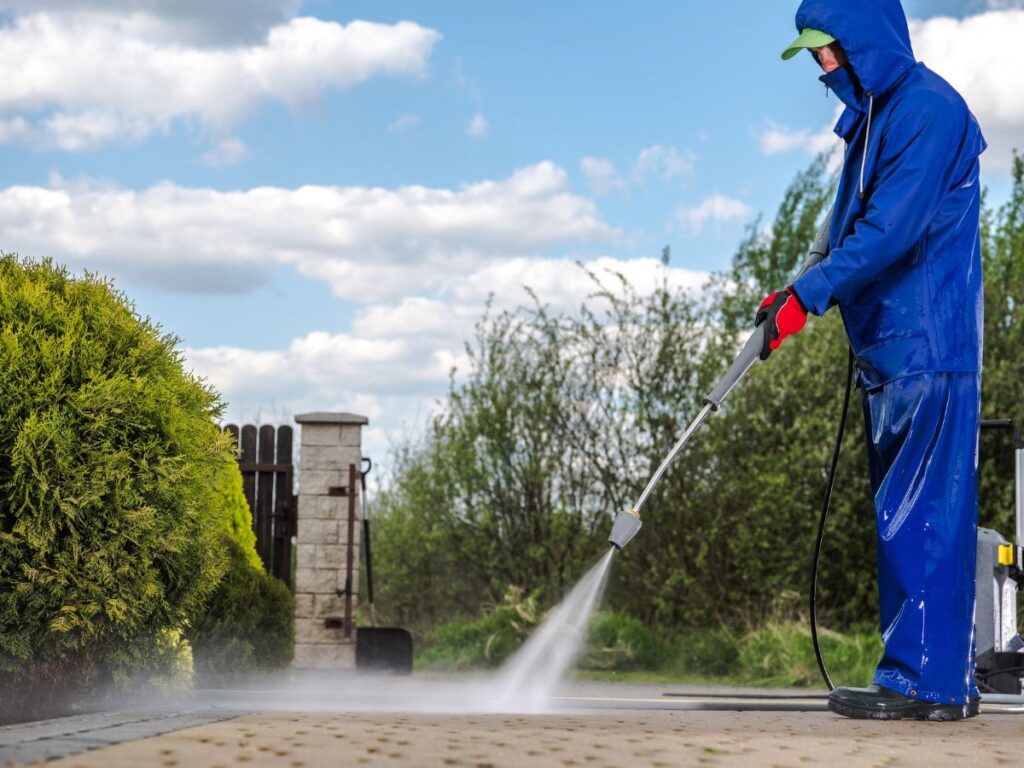
Rental pressure washers are widely available, and many South Shore homeowners have tried DIY driveway cleaning at least once. The results are usually a significant improvement over the pre-cleaned state — but they typically fall short of professional results in several specific ways:
Surface cleaner attachment vs single wand
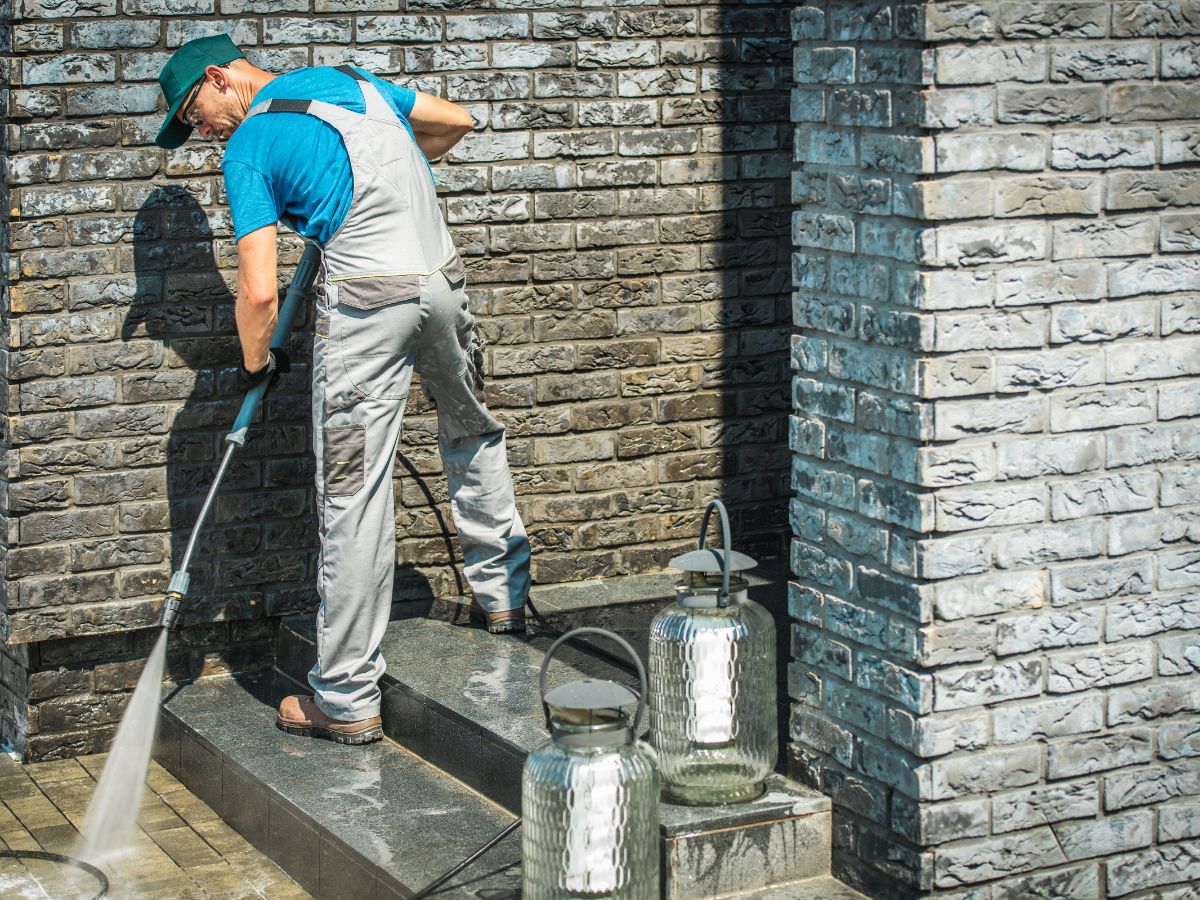
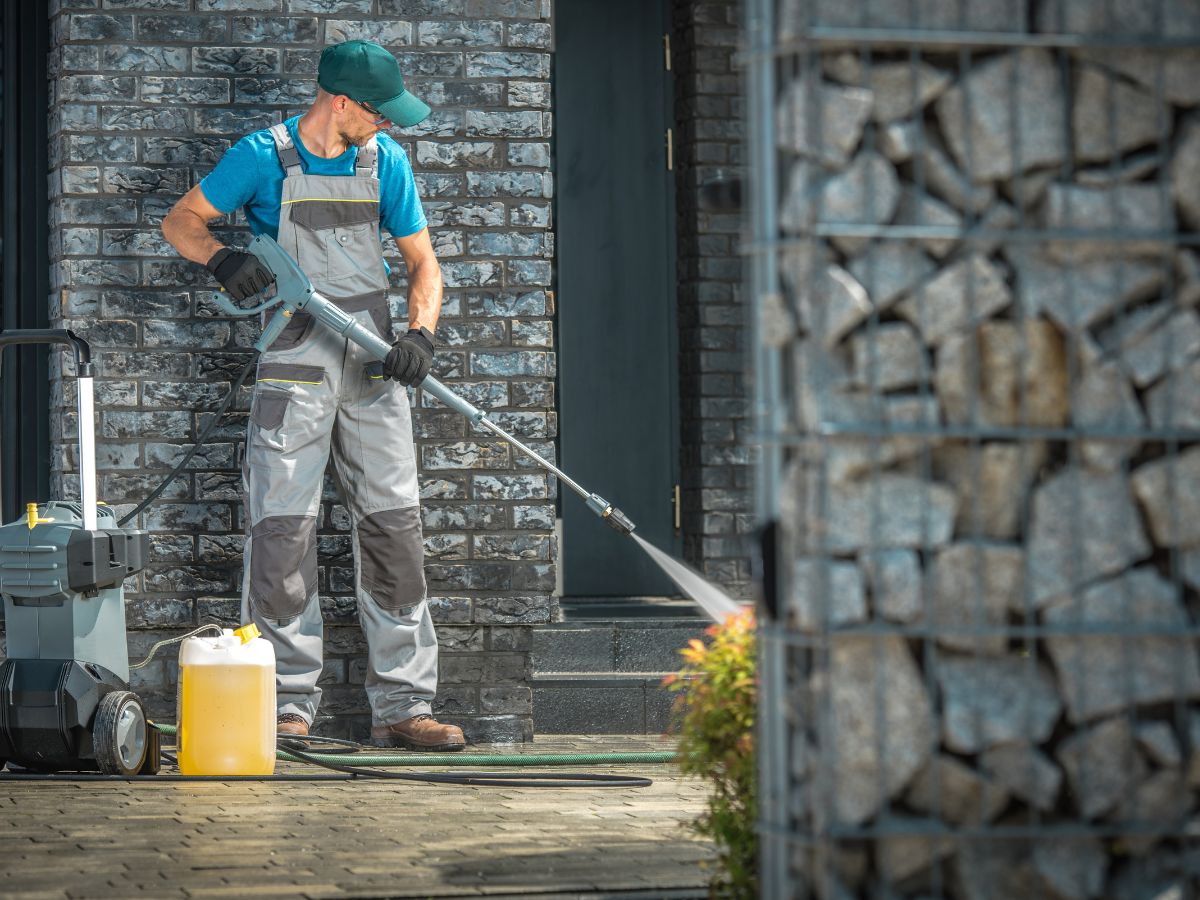
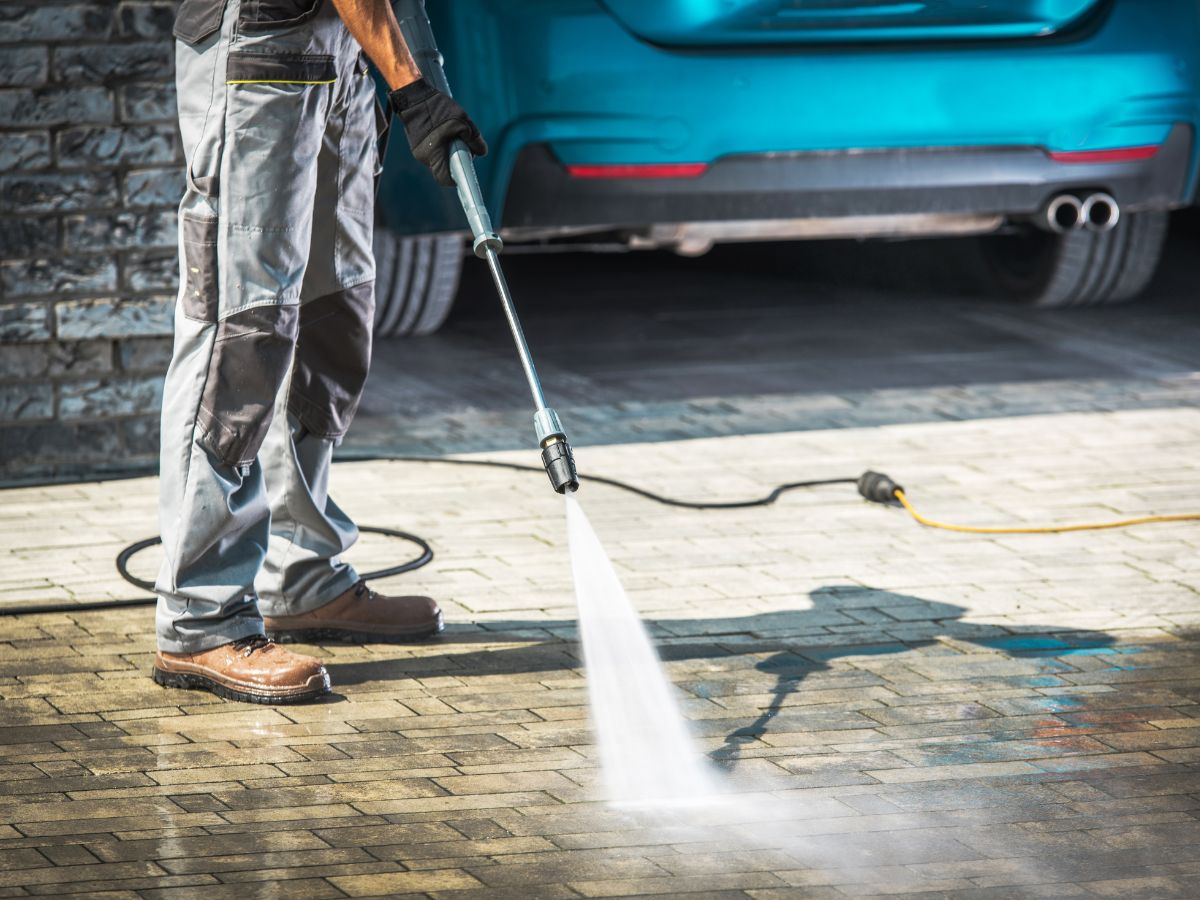
The most visible difference between a professional driveway clean and a DIY attempt is the equipment used to apply pressure to the surface. A single wand produces a fan-shaped spray that leaves overlapping stripe marks across the concrete — the telltale sign of DIY pressure washing that actually looks worse than the original staining on a large, flat surface. Professional driveway washing uses a surface cleaner attachment — a spinning, enclosed head that applies pressure uniformly across a 15 to 20 inch path, producing consistent results without stripe marks.
Pressure and flow rate
Consumer-grade pressure washers typically operate at 1,500 to 2,000 PSI with low flow rates. Professional equipment runs at 3,000 to 4,000 PSI with significantly higher GPM — the combination of pressure and flow volume that effectively lifts embedded staining rather than simply displacing surface debris. The difference is visible in the result: professional cleaning removes embedded discolouration that consumer equipment cannot reach.
Pre-treatment chemistry
Oil stains, tyre marks, and biological growth require pre-treatment with the appropriate cleaning chemistry before pressure is applied. Alkaline degreaser applied to oil-contaminated areas breaks down the hydrocarbon bonds that hold the stain in the concrete. Biocide pre-treatment applied to algae and lichen areas kills the organism before washing removes the dead material. DIY cleaning without pre-treatment simply washes over stains that chemistry is required to release.
Post-clean rinse and neutralisation
Cleaning solutions left on concrete surfaces can continue chemically reacting with the material after the cleaning is complete. Professional cleaning includes a thorough post-clean rinse that removes residual chemistry and neutralises the surface, protecting the concrete from the ongoing effects of cleaning agents that were not fully removed.
Every element described above is standard practice on every concrete cleaning job on the South Shore from South Shore Soft Wash — from surface cleaner equipment and pre-treatment chemistry to a thorough final rinse before we leave the property.
What Before-and-After Driveway Cleaning Actually Looks Like
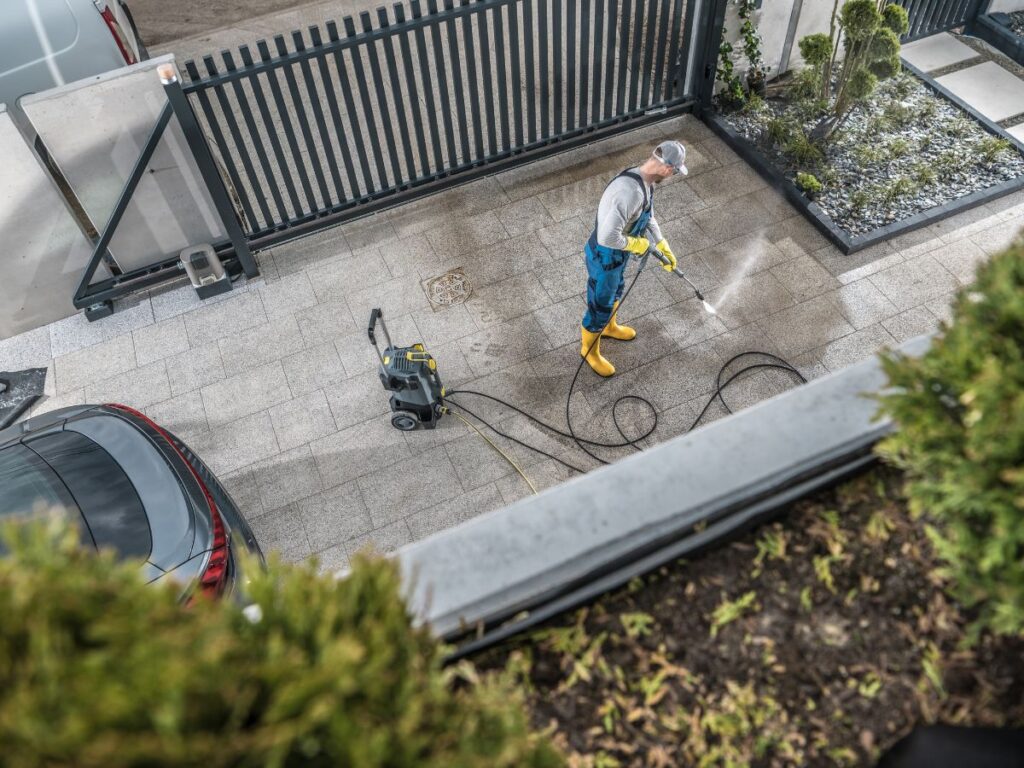
The results of professional driveway pressure washing are best communicated visually — which is why South Shore Soft Wash documents before-and-after photography on every job. In text, here is what the transformation covers:
Concrete driveways
A concrete driveway before cleaning is typically a mottled grey-brown — a base colour darkened and mottled by salt residue, embedded dirt, tyre marks, and biological staining. The surface appears flat and uniform in its dinginess. After professional cleaning, the aggregate detail of the concrete is visible again, colour variation across the slab reflects the natural variation in the concrete mix rather than accumulated grime, and the transition from light to shadow across the surface has depth again. It does not look “new” — it looks clean, and the difference is immediate.
Asphalt driveways
Asphalt loses its rich black colour within a few years and fades to the grey-brown that South Shore homeowners associate with an older driveway. Much of this apparent fading is surface contamination — oxidised oils, salt residue, and biological growth sitting on the asphalt surface rather than colour fade of the material itself. Professional cleaning removes the surface layer and restores the darker, more saturated colour that makes an asphalt driveway look well-maintained rather than aged.
Concrete walkways and front entries
Front walkways see the most foot traffic on a property and accumulate salt, mud, and organic staining at the highest rate. The areas immediately outside entry doors — where footwear is scraped and where organic material from shoes deposits — are typically the most heavily stained sections of a property’s concrete. These areas respond dramatically to professional cleaning: the before-and-after contrast at entry points is often the most striking on the entire property.
Pool Decks — Why They Need a Different Approach
Concrete and paver pool decks share the staining challenges of driveways and walkways — algae, organic debris, and general surface discolouration — but they require a more careful approach for two reasons:
First, pool decks are in constant contact with pool chemistry. Cleaning solutions that run off a pool deck enter the pool water and affect its chemical balance. South Shore Soft Wash uses pool-safe chemistry on deck cleaning jobs — cleaning solutions that do not disrupt pool chemistry when managed appropriately, and rinsing protocols that direct runoff away from pool water wherever the site allows.
Second, pool decks are textured for slip resistance. That texture — which is essential for safety — is also effective at trapping dirt, algae, and debris. High pressure applied to a slip-resistant texture without the appropriate surface cleaner equipment can abrade the texture pattern over time, reducing its effectiveness. Our surface cleaner equipment cleans the texture without degrading it.
Pool deck restoration is part of our pool deck cleaning and concrete services on the South Shore — scheduled in spring before pool season begins, when the deck has accumulated the full winter’s worth of staining and biological growth.
Patios, Steps, and Other Concrete Surfaces
Every concrete and paver surface on a South Shore property accumulates the same categories of staining and biological growth as the driveway — the specific accumulation profile depends on exposure, traffic, and proximity to trees and organic material. Common spring cleaning candidates beyond the driveway include:
- Concrete and paver patios: Patio surfaces in contact with planting beds and lawn areas accumulate organic staining, leaf tannin discolouration, and biological growth at the edges where they meet landscaping. Paver joints accumulate debris that promotes weed germination and moss establishment between pavers
- Steps and stoop surfaces: Entry steps see concentrated foot traffic and are prime areas for salt accumulation near the street and biological growth in shaded areas near the house
- Retaining walls and landscape borders: Concrete retaining walls and landscape borders accumulate the same biological staining as vertical siding — algae and mildew on north-facing and shaded surfaces — and respond well to soft washing at appropriate pressures
How Often Should South Shore Driveways Be Professionally Cleaned?
For most Bridgewater, MA homes, annual spring cleaning keeps driveways and concrete surfaces in consistently good condition — removing the winter accumulation before it has time to embed more deeply and before biological growth has a full warm season to establish and spread. Homes with heavy tree canopy over the driveway, higher vehicle traffic, or significant oil staining from older vehicles may benefit from cleaning twice per year — spring and fall.
Driveways that have not been professionally cleaned in three or more years often require additional pre-treatment passes and more time per square foot to remove deeply embedded staining. The cleaning is still effective — but more involved than annual maintenance cleaning of a surface that has not been allowed to accumulate multiple seasons of staining.
Pair Driveway Cleaning With House Washing for a Full Exterior Refresh
The most striking exterior improvement on a South Shore property comes from addressing both the horizontal surfaces (driveway, walkways, patio) and the vertical surfaces (siding, trim, foundation) at the same time. A clean driveway in front of algae-stained siding, or clean siding above a grimy walkway, reads as inconsistent. When both are addressed together through our house washing service and driveway cleaning combined, the visual impact is significantly greater than either service alone.
Schedule Driveway Pressure Washing on the South Shore
Spring is the right time to address what winter left on your driveway — before another season of warmth lets biological growth establish and before salt and staining embed further into the concrete. Get in touch with South Shore Soft Wash to schedule driveway pressure washing and any other exterior cleaning for your Bridgewater, MA or South Shore property. We provide written estimates, use professional equipment, and stand behind the results on every job.
Contact South Shore Soft Wash — Driveway & Concrete Cleaning on the South Shore