Concrete is the most versatile hardscape material on most South Shore properties — driveways, walkways, patios, pool decks, retaining walls, steps, and garage floors are all typically poured concrete or concrete-based pavers. It is also porous, which means it absorbs the staining agents that Massachusetts winters and humid summers generate abundantly: road salt, biological growth, oil, tannins from leaves and organic debris, and the freeze-thaw residue that accumulates over years.
Professional concrete cleaning in Bridgewater, MA is not the same service applied uniformly to every surface. A driveway with oil stains, a patio next to a planting bed, and a pool deck with biological growth each have a specific contamination profile and require the right combination of pressure, chemistry, and technique to clean correctly and completely. This guide covers what South Shore Soft Wash addresses on each surface type and what the difference between proper and improper cleaning looks and costs over time.
How South Shore Conditions Affect Concrete
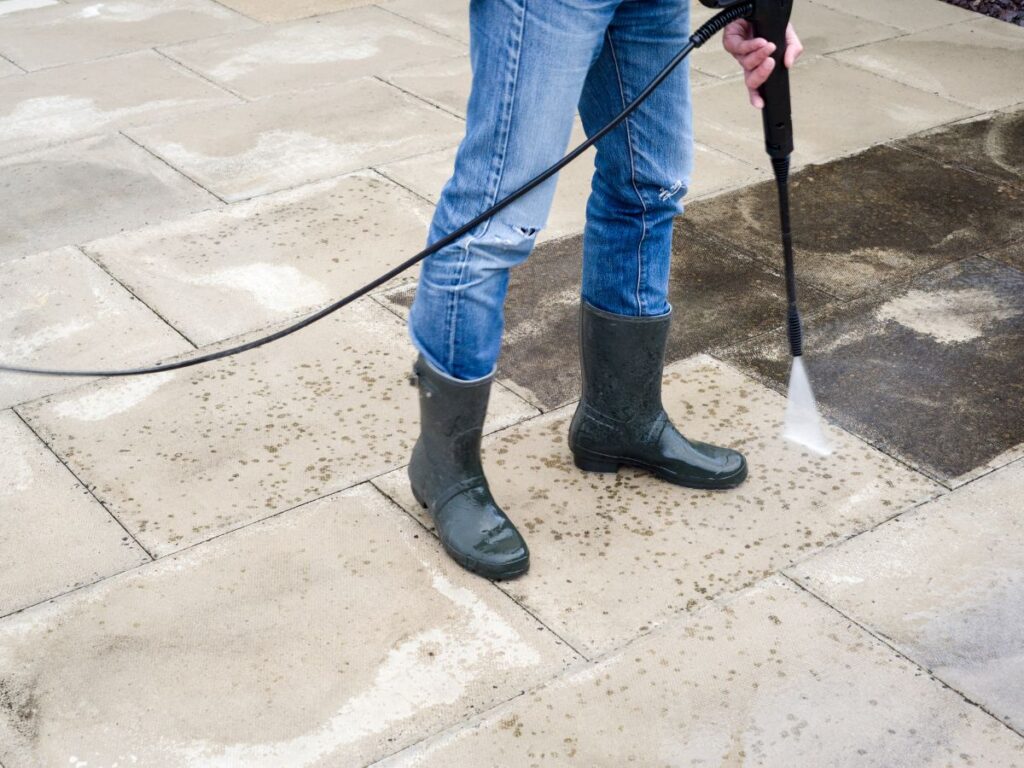
Concrete on the South Shore takes on staining from several directions simultaneously, and the conditions here are harder on exterior concrete than in many other regions:
- Road salt and de-icer: Plymouth County roads receive heavy salt application from November through March. Salt migrates into concrete through surface absorption and through melt water that carries salt into the pore network. The result — visible as white efflorescence on the surface — is mineral crystallisation inside the concrete that also accelerates spalling over time
- Freeze-thaw cycling: Massachusetts averages dozens of freeze-thaw cycles per winter. Water that has entered concrete pores expands when it freezes, gradually widening pores, creating surface spalling, and opening cracks that allow deeper water penetration in subsequent cycles. Cleaning removes the debris from damaged areas but does not reverse physical damage — sealing after cleaning slows further deterioration significantly
- Biological growth in humid conditions: The South Shore’s maritime humidity creates conditions where algae, moss, and lichen establish readily on any shaded or moist concrete surface. This growth is not just cosmetic: algae produces organic acids that chemically etch concrete over time, and lichen rhizoids physically penetrate the surface as the organism anchors itself
- Tannin staining from deciduous trees: South Shore properties with oak, maple, or other tannin-rich trees directly over concrete surfaces develop deep brown-black staining from leaf and seed pod decomposition in contact with wet concrete. Tannin staining penetrates deeply and requires oxidising chemistry to break down rather than pressure alone
Driveway Concrete Cleaning — the Most Visible Surface
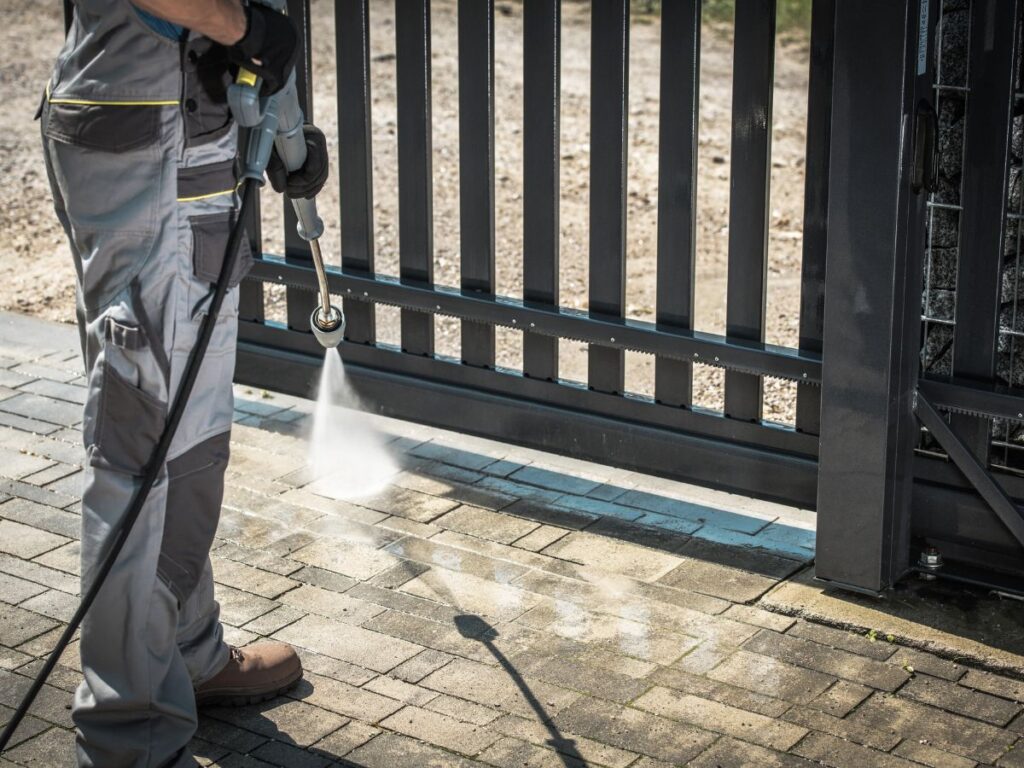
The driveway is the first surface visitors see and the one that most visibly communicates the overall maintenance standard of a property. After a South Shore winter, even well-maintained driveways accumulate:
- Salt efflorescence along the edges and at the apron where ploughed salt accumulates
- Tyre marks and rubber transfer at turning points near the garage
- Oil and fluid stains in parking positions
- Biological growth in shaded sections near the foundation or under tree canopy
- General surface darkening from oxidised debris and fine particulate embedded in the pore structure
The surface cleaner difference
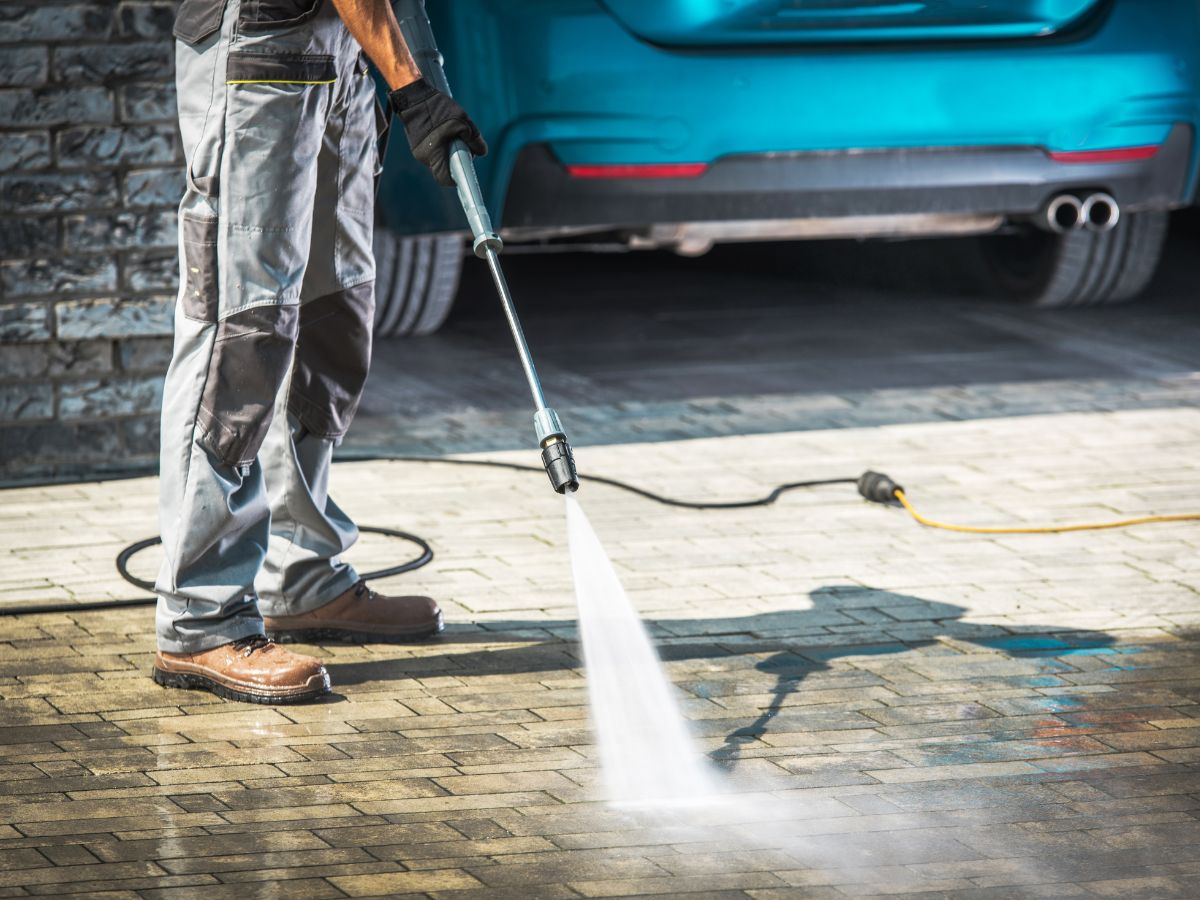
Driveway cleaning with a single wand — whether by a homeowner with a rental unit or a less-equipped service — produces the characteristic stripe marks that are the visual signature of inadequate equipment. A surface cleaner attachment covering 18 to 20 inches per pass applies pressure uniformly across the full slab, producing consistent results without the overlap banding that wand cleaning creates. South Shore Soft Wash uses surface cleaner equipment on every driveway job — it is not optional equipment for flat concrete surfaces, it is the only approach that produces professional results.
Pre-treatment for oil and organic staining
Oil stains in parking positions require alkaline degreaser pre-treatment applied 5 to 10 minutes before pressure washing. The degreaser penetrates the oil-contaminated pores, breaks down hydrocarbon bonds, and allows the released material to be lifted by the pressure wash. Applied after washing, degreaser has no surface to penetrate — it needs to be in place before the wash. Tannin staining similarly responds to oxidising pre-treatment that breaks down the organic compounds before pressure is applied.
Every driveway job through our concrete cleaning service includes a pre-treatment assessment — identifying the staining types present and applying the appropriate chemistry before the pressure wash begins.
Patio Pressure Washing — Restoring Outdoor Living Spaces
Concrete and paver patios sit at the interface between the house and the landscape — which means they collect staining from both directions. The house side accumulates runoff staining, moss growth in the shade of the eaves, and the tannin discolouration that flows off the roof during rain. The landscape side accumulates organic debris from adjacent beds, tannin staining from overhanging trees, and the biological growth that establishes wherever soil contact creates a nutrient source.
Paver joints and edge staining
Paver patios have joint sand between individual pavers that accumulates organic debris over time, supporting weed germination and moss establishment. Professional cleaning of a paver patio includes attention to the joint areas — cleaning the surface of the pavers and the material in the joints that would re-seed biological growth onto the clean surface immediately if left untreated. After cleaning, polymeric joint sand replacement is often recommended to restore joint stability and weed resistance.
Working near planting beds
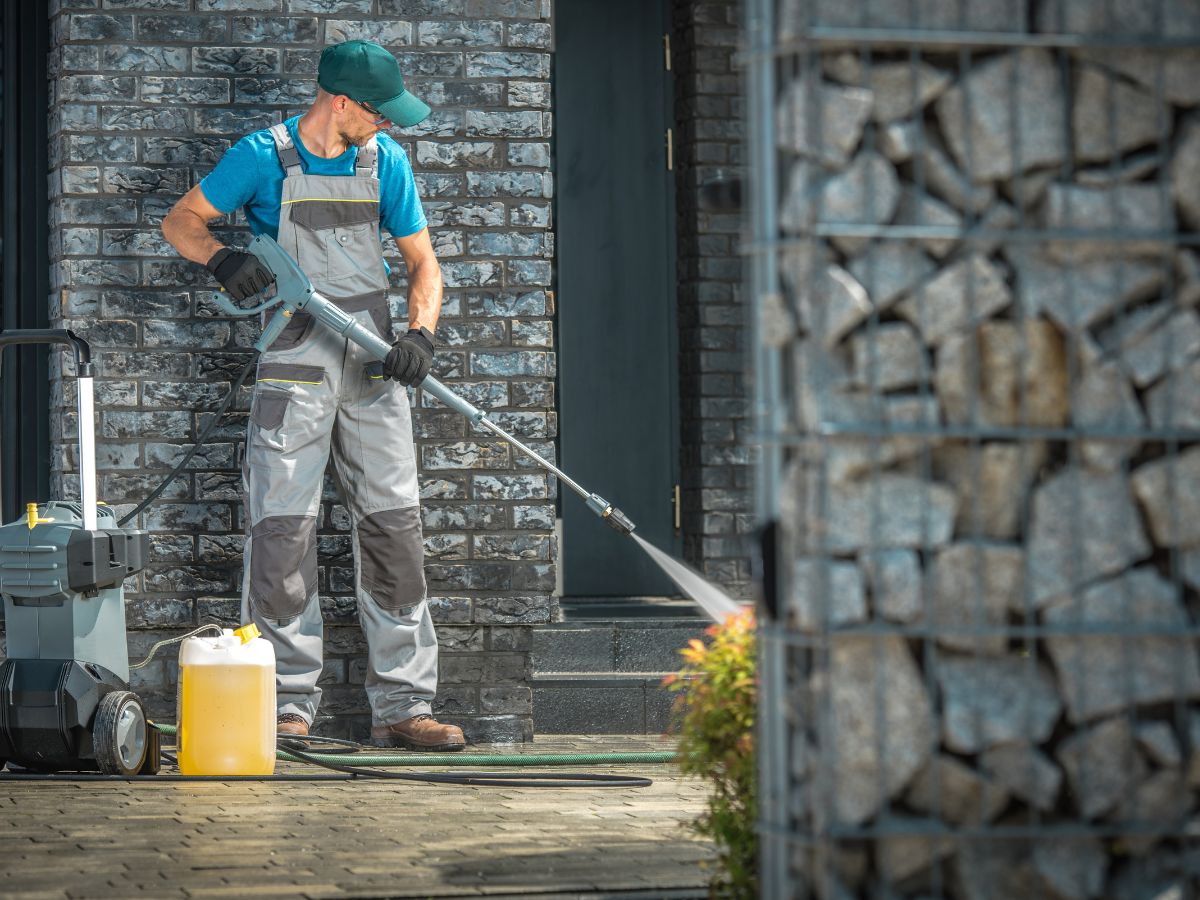
Patios adjacent to planting beds require careful runoff management. Cleaning chemistry that contacts garden soil or plant material needs to be diluted and rinsed — professional cleaning protocol includes pre-wetting adjacent plants before work begins and post-rinsing any vegetation that contacted cleaning solution during the wash. This is standard practice at South Shore Soft Wash, not an optional precaution.
Pool Deck Cleaning — Safety, Aesthetics, and Water Chemistry
A pool deck that is not cleaned regularly develops biological growth — primarily algae — that creates a slip-and-fall hazard on a surface that is inherently wet during use. This is the primary safety argument for regular pool deck cleaning, and it is a compelling one: a textured slip-resistant surface coated in wet algae is dangerous regardless of how carefully it was designed to prevent slipping when clean.
Pool-safe chemistry
The critical technical requirement for pool deck cleaning is chemistry compatibility with pool water. Cleaning solutions that run off the deck enter the pool and disrupt the pool’s chemical balance — raising or lowering pH, affecting chlorine residual, and in some cases introducing compounds that are difficult to correct without a partial drain.
South Shore Soft Wash uses cleaning chemistry that is appropriately diluted and poolside-safe for deck applications, and applies rinse protocol that directs runoff away from the pool where site conditions allow. This is not a small detail — it is the difference between a deck cleaning that restores the surface and one that creates a pool chemistry problem at the same time.
Preserving the slip-resistant texture
Pool deck surfaces are textured specifically to provide traction when wet. High-pressure washing applied with incorrect technique or equipment can abrade this texture over time, gradually reducing the surface’s effectiveness at preventing slipping. Surface cleaner equipment and appropriate pressure calibration clean the deck without degrading the texture profile.
Pool deck cleaning is most efficiently scheduled as part of a full spring exterior clean — pairing it with house washing and driveway cleaning in a single visit addresses the full property before pool season opens.
Concrete Steps, Retaining Walls, and Foundation Surfaces
Entry steps and stoops
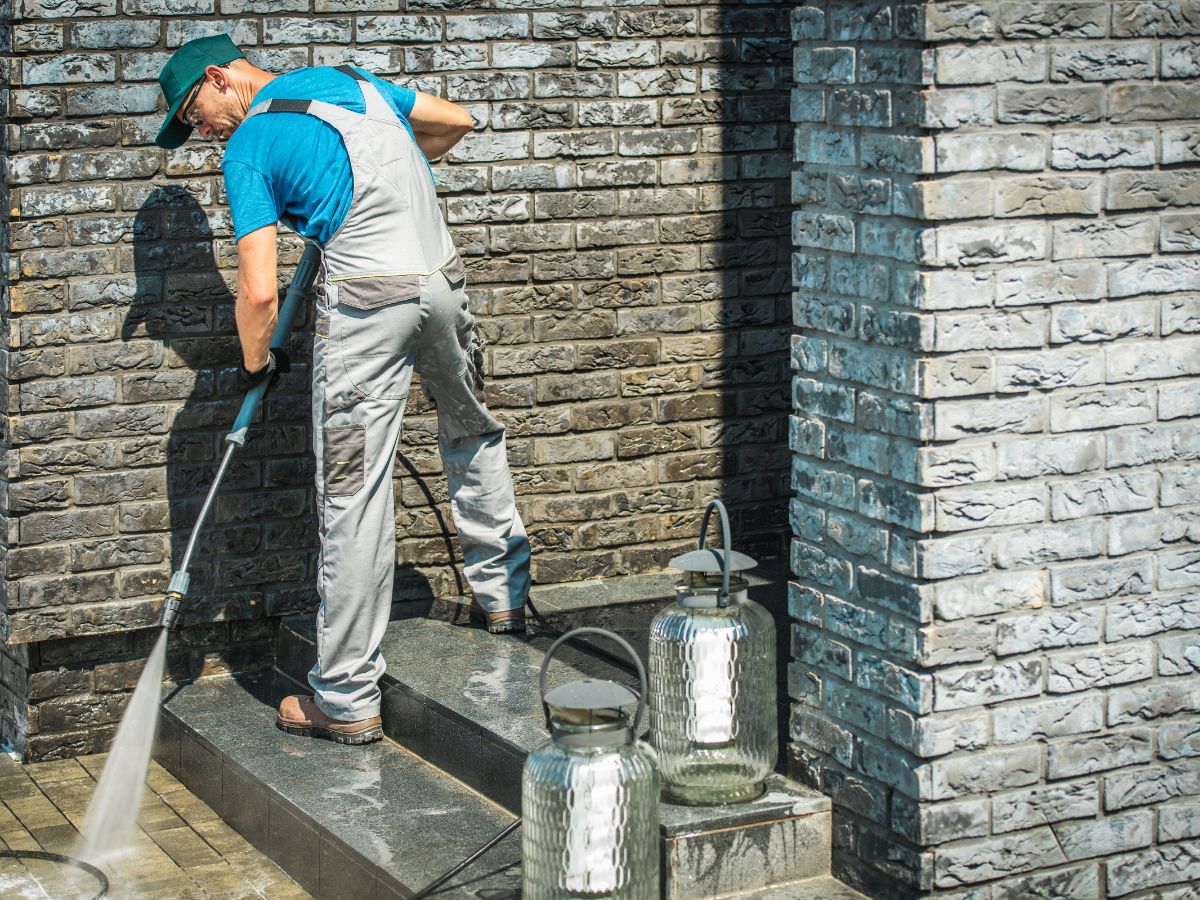
Front steps see the most concentrated foot traffic on any property and accumulate the most aggressive combination of salt, mud, and organic staining. The areas where foot traffic is highest — the centre of each tread and the top riser — typically show the deepest staining, while the edges and risers accumulate biological growth in the areas of least traffic. Professional cleaning of entry steps uses appropriate pressure for the concrete mix and age, and pays specific attention to the salt-heavy areas near street level.
Retaining walls
Concrete retaining walls develop vertical surface staining — primarily biological growth on north-facing and shaded surfaces, and efflorescence staining where water migrates through the wall from behind. Soft washing at appropriate pressure addresses biological growth without forcing water into the wall structure. Efflorescence on retaining walls often requires a light acid wash after the initial cleaning to fully dissolve the mineral deposits.
Foundation washing
The lower courses of a home’s foundation accumulate the most concentrated staining on the property — road salt splash, biological growth accelerated by ground moisture, and tannin staining from organic material at grade level. Foundation washing requires careful pressure control to clean the exterior surface without forcing moisture through the foundation wall. South Shore Soft Wash treats foundation cleaning as a distinct application with its own pressure and chemistry protocol, not an extension of driveway or siding cleaning technique.
After Cleaning — Should You Seal Your Concrete?
Professionally cleaned concrete is an ideal surface for sealing — the pores are open, the surface is free of biological growth that would be trapped under a sealer, and the condition of the concrete is fully visible for the first time in years. Sealing after cleaning:
- Reduces the rate at which biological growth re-establishes by limiting the moisture and nutrient access that algae and mold require
- Slows the penetration of oil, tannins, and salt into the concrete pore structure — making future cleaning easier and less frequent
- Provides a degree of freeze-thaw protection by reducing the water absorption that drives spalling
- Restores or enhances the visual appearance of the concrete — available in matte and gloss formulations depending on the aesthetic preference
South Shore Soft Wash can advise on appropriate sealing products and timing after cleaning — sealing should be done on fully dry concrete, typically 24 to 48 hours after cleaning under spring weather conditions.
How Often Should South Shore Concrete Surfaces Be Cleaned?
Annual spring cleaning keeps most Bridgewater, MA concrete surfaces in consistently good condition — removing the winter accumulation before it embeds deeper and before biological growth has a warm season to establish and expand. Specific situations that warrant more frequent cleaning:
- Pool decks: twice per year — spring before pool season opens and mid-season if heavy algae growth develops in July and August
- Driveways with significant tree canopy or heavy vehicle traffic: spring and fall
- Patios in heavy shade or adjacent to planting beds with aggressive organic material: spring and fall
- Any surface where biological growth is re-establishing within a few months of cleaning may benefit from a post-clean biocide treatment that extends the period before regrowth
Schedule Concrete Cleaning in Bridgewater, MA
Spring is the optimal window to address what the winter left on your driveways, patios, and pool deck — before another warm season lets biological growth accelerate and before staining embeds further. Reach out to South Shore Soft Wash to schedule a free estimate for concrete cleaning in Bridgewater, MA or anywhere on the South Shore. We assess each surface, apply the right approach for its specific condition, and deliver results that hold through the season.
Looking for a complete exterior clean, not just concrete? See our full pressure washing services to understand everything South Shore Soft Wash can address in a single spring visit.
Contact South Shore Soft Wash — Concrete Cleaning Services in Bridgewater, MA & the South Shore