If you have been researching duct cleaning for your South Shore home, you have almost certainly encountered both terms — “HVAC duct cleaning” and “air duct cleaning” — sometimes used interchangeably, sometimes seemingly referring to different things. It is a source of genuine confusion, and the confusion is not entirely the homeowner’s fault. The industry uses the terms inconsistently, and what a specific company means by either phrase can vary significantly depending on what their service actually covers.
This guide untangles the terminology, explains what a complete duct cleaning service should include regardless of what it is called, and helps South Shore homeowners in Bridgewater, Taunton, and the surrounding communities understand what to ask for — and what to verify — before booking.
The Terminology Problem — Why It Creates Confusion
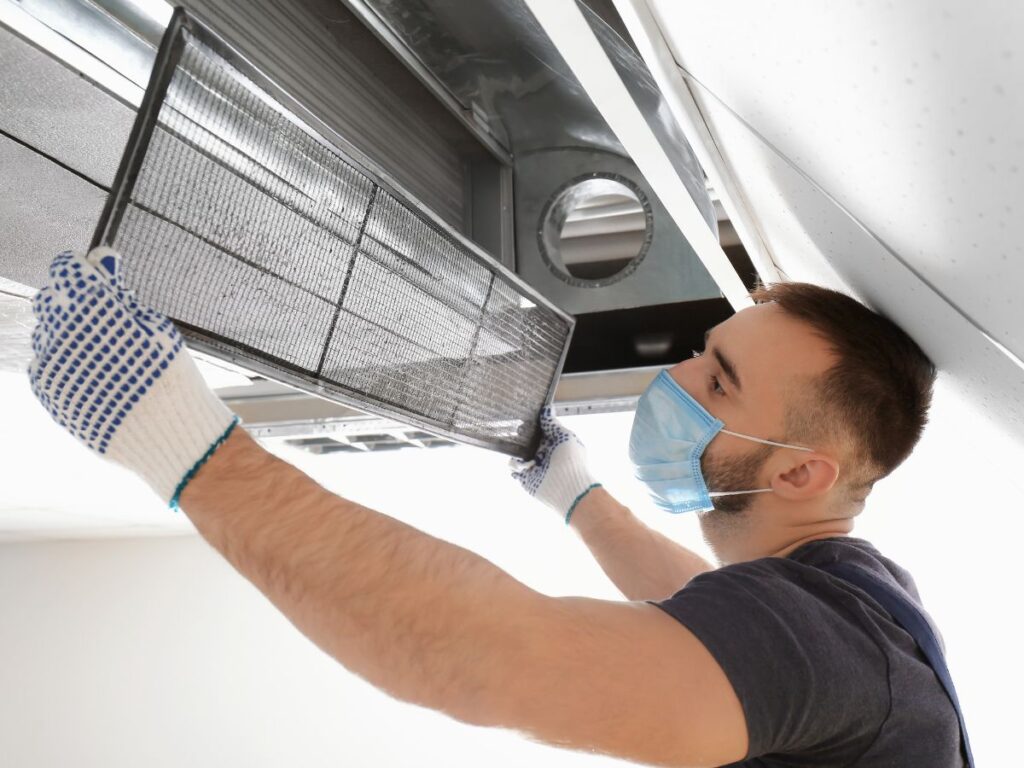
“Air duct cleaning” and “HVAC duct cleaning” both refer to cleaning the network of ducts that distribute conditioned air through a home. The duct network is part of the HVAC (heating, ventilation, and air conditioning) system — so technically, cleaning the ducts is both air duct cleaning and HVAC duct cleaning. Neither term is wrong.
The confusion arises because different companies define the scope of these services differently:
- Narrow definition: Some companies use “air duct cleaning” to mean cleaning only the visible duct sections and registers — the parts that are most accessible and quickest to address. This approach skips the air handler, the blower, and the sections of ductwork that cannot be reached without access cuts or dedicated equipment
- Broader definition: “HVAC duct cleaning” sometimes signals a more comprehensive scope that includes the full duct network plus the air handler components — blower wheel, evaporator coil housing, and drain pan — that sit at the centre of the system and affect everything flowing through it
- Identical meaning: In many cases, the two terms are used interchangeably to mean exactly the same service — whatever the company in question provides, regardless of its actual scope
The upshot: the label matters less than the specific scope of what is included. Two companies both advertising “HVAC duct cleaning” may be offering very different services at different price points, and the differences in what they cover produce meaningfully different results.
What a Complete Duct Cleaning Service Actually Covers
A thorough duct cleaning service — whether it is called air duct cleaning or HVAC duct cleaning — should cover the following components to be genuinely complete:
Supply ducts
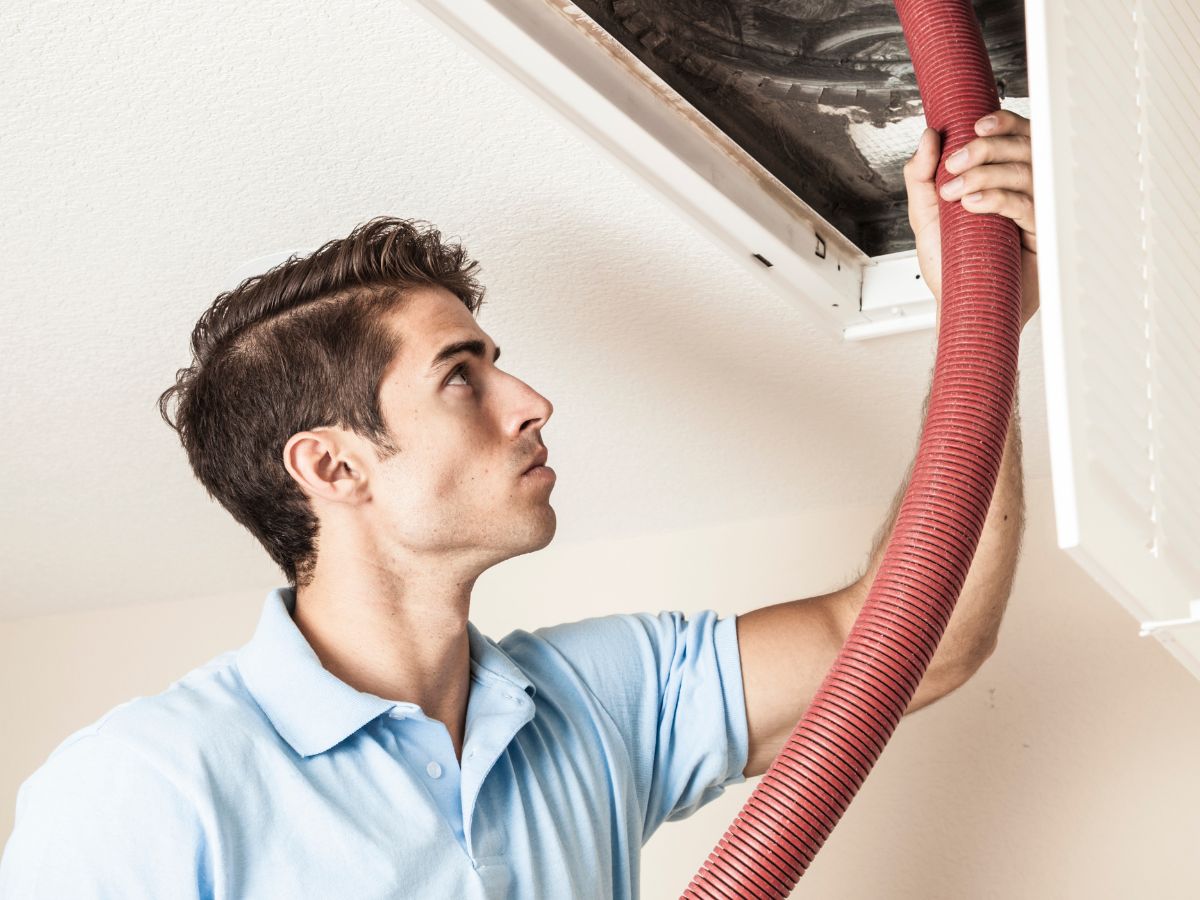
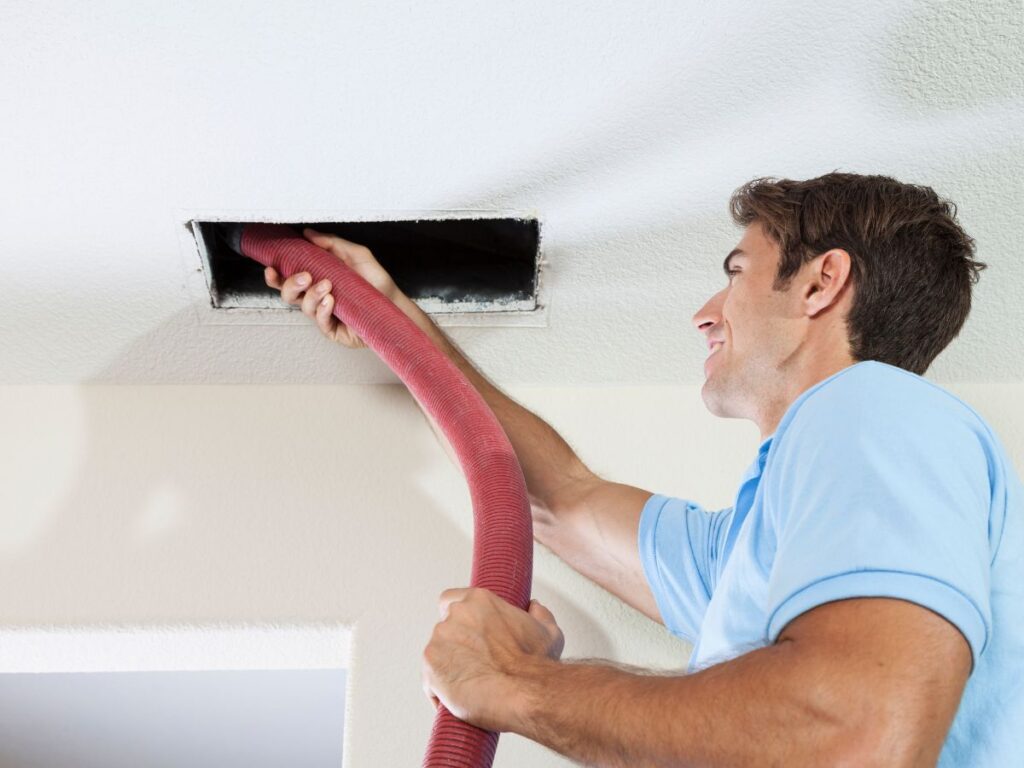
The supply ducts carry conditioned air from the air handler to each room in the home through supply registers. These ducts accumulate the fine particulate that passes through or around the air filter — the material that makes it into the system despite filtration. Supply duct cleaning uses negative pressure equipment (a powerful vacuum connected to the duct network) combined with agitation tools that dislodge debris from duct walls and carry it to collection.
Return ducts
The return ducts draw air from living spaces back to the air handler. Because they are the intake side of the system, they carry unfiltered room air — everything airborne in the living space passes through the return registers on the way back. Return ducts typically show heavier accumulation than supply ducts, particularly near return registers in rooms with pets, heavy foot traffic, or proximity to the kitchen. Return duct cleaning is not optional — it is often where the most significant contamination in the system is found.
Registers and grilles
Each supply and return register is removed, cleaned separately outside the duct system, and reinstalled. Cleaning registers while they are in place risks dropping debris into the duct below. Registers that are damaged, corroded, or no longer seating correctly against the wall or floor surface are flagged for replacement.
Air handler and blower
The air handler sits at the junction of the return and supply sides — it is where room air enters the system, gets filtered, gets conditioned, and gets pushed back out through the supply network. The blower wheel that moves air through the entire system accumulates debris on its blades, reducing efficiency and eventually throwing off its rotational balance. The blower compartment is cleaned, and the blower wheel is assessed and cleaned where fouling is present.
Evaporator coil housing and drain pan
The evaporator coil is the cold surface inside the air handler where heat exchange occurs. A fouled evaporator coil — coated in the fine particulate that passes through the filter — is less effective at heat exchange and can in severe cases ice over entirely, blocking cooling function. The drain pan beneath the coil collects condensate; standing water, algae growth, or a blocked drain in the pan creates moisture that enters the duct system and supports biological growth. Both are inspected and addressed as part of a complete service.
Every component above is included in our air duct and dryer vent cleaning service on the South Shore — because partial cleaning that misses the air handler or skips the return network leaves the most significant contamination sources in place.
What “HVAC Cleaning” Sometimes Means — and What It Does Not
Some homeowners encounter the term “HVAC cleaning” used to describe a service that extends beyond duct cleaning to include HVAC system maintenance — cleaning the outdoor condenser coil, servicing refrigerant, checking electrical connections, and calibrating thermostat settings. This is HVAC maintenance, not duct cleaning, and it is typically performed by a licensed HVAC technician rather than a duct cleaning specialist.
The distinction matters because duct cleaning and HVAC maintenance are different services addressing different problems:
- Duct cleaning: Addresses the contamination inside the duct network — the accumulated dust, debris, allergens, and biological growth that circulates through the air supply system. Performed by cleaning specialists using negative pressure equipment and agitation tools
- HVAC maintenance: Addresses the mechanical and electrical condition of the heating and cooling equipment itself — the furnace, air conditioner, heat pump, and associated components. Performed by licensed HVAC technicians
Both are legitimate and valuable services. They are not substitutes for each other. A homeowner whose HVAC system was serviced last fall and whose ducts have not been cleaned in five years still has five years of accumulated debris in the duct network, regardless of the mechanical service. And a homeowner who had the ducts cleaned still needs the mechanical components of the HVAC system maintained on an appropriate schedule.
The Source Removal Standard — What Separates Thorough from Superficial
Beyond the terminology question, the most important distinction in duct cleaning services is the method used. The industry standard for effective duct cleaning is source removal — and services that do not meet this standard produce results that look like cleaning but leave the majority of the contamination in place.
Source removal cleaning
Source removal creates negative pressure throughout the duct system using high-powered vacuum equipment before any agitation begins. Debris dislodged from duct walls is immediately drawn toward the vacuum and into the collection system — particles move away from the living space, not into it. Agitation equipment (rotating brushes, compressed air whips, pneumatic tools) is introduced through registers or access points in each duct branch to break loose debris that has adhered to duct surfaces.
This is the method recommended by the National Air Duct Cleaners Association (NADCA) and is the approach that produces genuine contamination removal — not just surface displacement.
Non-source removal approaches
Services that vacuum register openings without connecting negative pressure to the full duct network, or that use portable vacuums without the flow capacity to create meaningful suction throughout the system, are not performing source removal cleaning. They are removing the visible debris at access points while leaving the accumulated contamination on duct walls throughout the rest of the network.
These services are sometimes advertised at very low prices and can look superficially like a thorough cleaning — registers are vacuumed, there is some visible activity — but the result is not equivalent to source removal cleaning, and the indoor air quality benefit is significantly reduced.
Why Spring Is the Right Time for Duct Cleaning on the South Shore
South Shore homeowners in Bridgewater, Taunton, and surrounding communities are best served by scheduling duct cleaning in spring for several practical reasons:
- The heating season just ended: The HVAC system has been circulating air through the duct network all winter. Everything that became airborne in the home during those months — dust, pet dander, cooking particulate, and the humidity-driven biological growth that Massachusetts winters promote — has been captured in the duct system. Spring cleaning removes the full season’s accumulation before it circulates through the cooling season
- Before air conditioning season: The cooling system uses the same duct network as the heating system. Clean ducts at the start of cooling season means the air conditioning runs through a clean delivery system rather than re-circulating winter’s worth of contamination throughout the home in summer
- Allergy season overlap: Spring pollen season on the South Shore runs April through June. A duct system that already contains accumulated allergens from the heating season adds to the indoor allergen load during outdoor pollen peaks. Cleaning before the pollen season removes the pre-existing load and reduces total indoor allergen concentration at the period when it matters most
- Scheduling availability: Duct cleaning services across southeastern Massachusetts are busiest in late summer and fall. Spring scheduling — particularly March and April — offers better availability and shorter lead times
Dryer Vent Cleaning — The Safety Service Often Scheduled Alongside Duct Cleaning
The dryer vent is a separate system from the HVAC duct network — it exhausts moisture and lint from the clothes dryer to the exterior of the home rather than recirculating air through the living space. It is not part of HVAC duct cleaning. But it is a critical safety maintenance item that is frequently scheduled at the same time as duct cleaning because the visit logistics are similar and South Shore homeowners appreciate addressing both in a single appointment.
Lint accumulation in dryer vents is the leading cause of residential clothes dryer fires in the United States. Massachusetts fire safety guidance recommends annual dryer vent cleaning for most households — and for households with longer vent runs, gas dryers, or high laundry volume, more frequent cleaning may be appropriate. A blocked dryer vent also reduces dryer efficiency significantly, extending drying time and increasing energy consumption.
South Shore Soft Wash provides dryer vent cleaning alongside air duct cleaning — addressing both in the same visit for Bridgewater, Taunton, and South Shore homeowners who want to cover all of their home’s ventilation systems in a single spring appointment.
Questions to Ask Before Booking Duct Cleaning on the South Shore
These questions separate thorough professional service from superficial cleaning regardless of what the service is called:
- Do you use source removal equipment — negative pressure throughout the full duct system — or do you vacuum register openings independently?
- Does your service include both supply and return duct networks, or only the supply side?
- Is the air handler, blower, and drain pan included in the scope, or only the ductwork?
- Do you remove and clean registers separately, or clean them in place?
- Do you perform a pre-cleaning inspection and communicate what you find before work begins?
- Do you provide documentation of the completed service?
A service that cannot clearly answer these questions — or that does not include all of these components — is not providing a complete duct cleaning regardless of whether it is labelled HVAC duct cleaning, air duct cleaning, or anything else.
Schedule Duct Cleaning on the South Shore
South Shore Soft Wash serves Bridgewater, Taunton, and communities across the South Shore with thorough source removal duct cleaning and dryer vent cleaning — the complete service, not a register vacuum. Get in touch to schedule your spring appointment or get a free estimate. We inspect before we clean, communicate what we find, and stand behind the results.
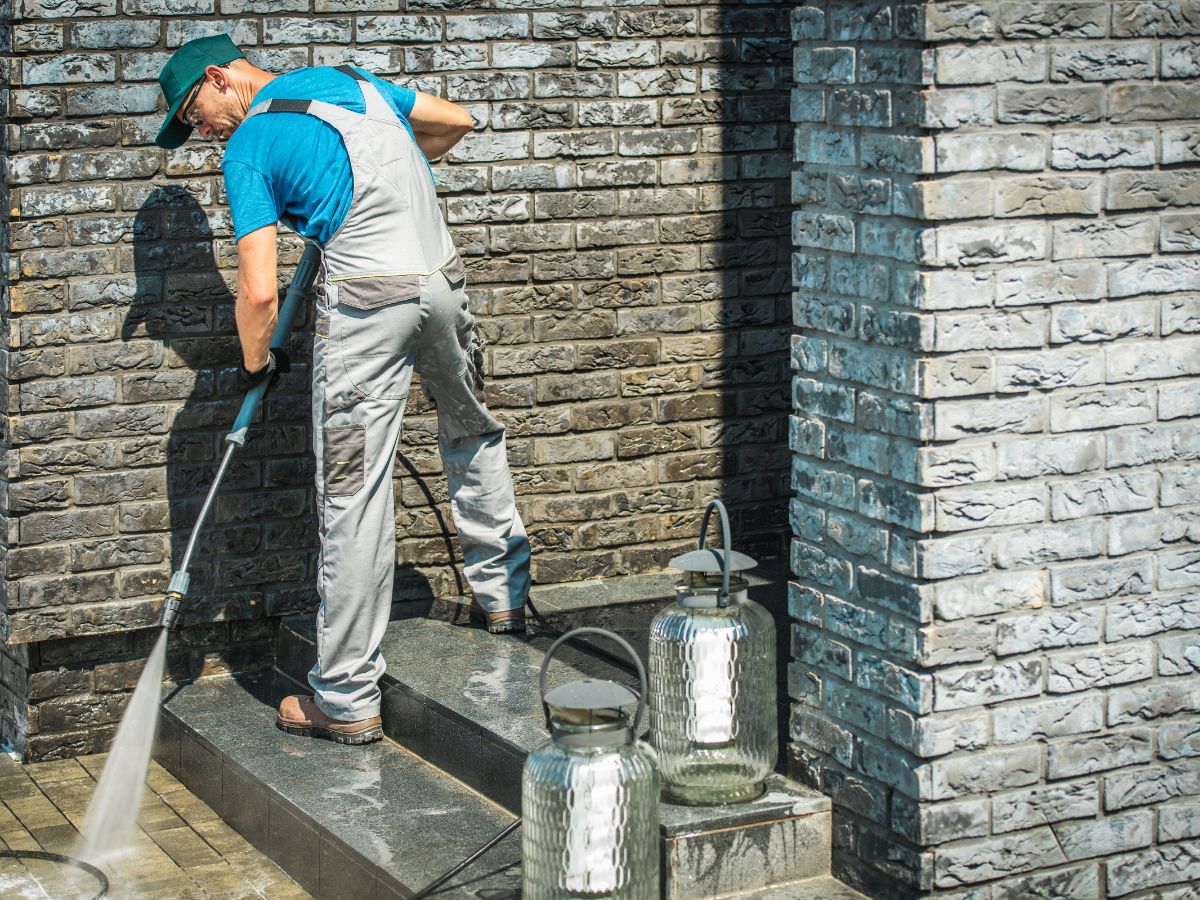
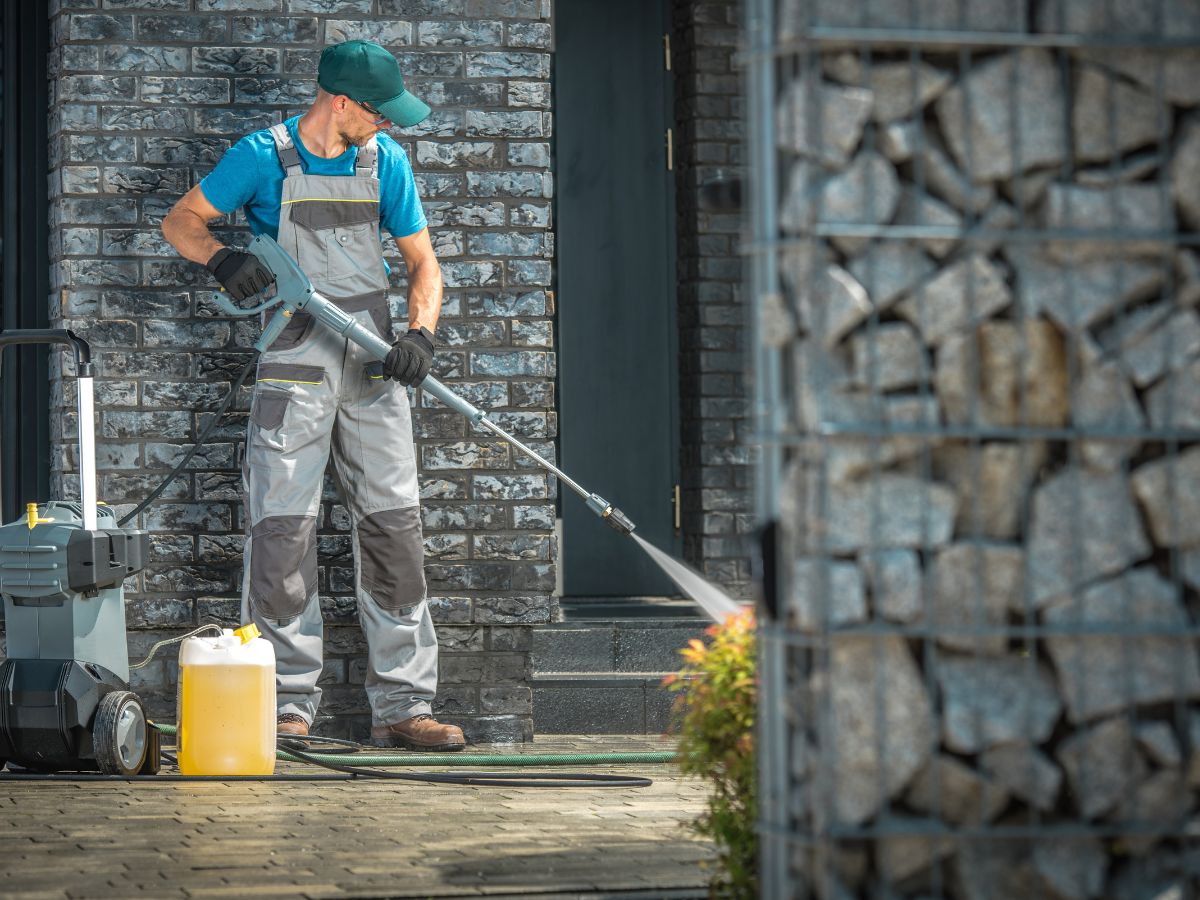
And if you are doing a full spring refresh, pair duct cleaning with our exterior cleaning services — house washing, driveway cleaning, roof cleaning, and more — for a complete inside-and-out reset before the season gets underway.
Contact South Shore Soft Wash — HVAC & Air Duct Cleaning on the South Shore, MA